
About Me
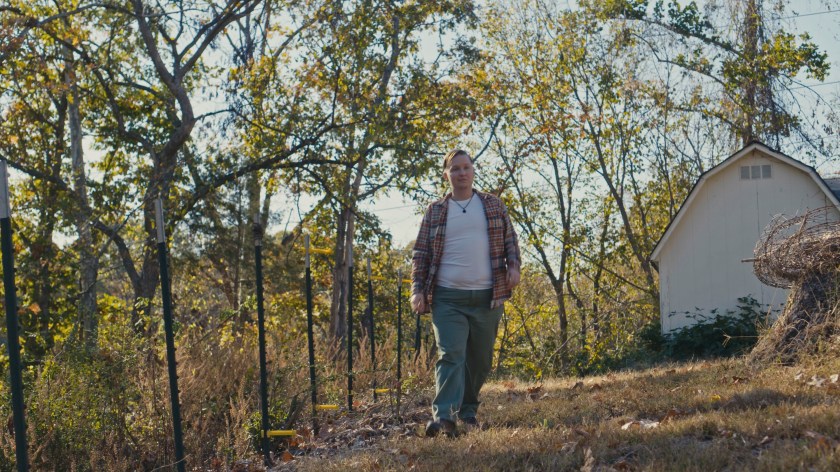
I am more than my work, and yet I define myself with thoughtful intention through the work I produce. A fifth-generation Ozark Mountains native, I returned to NWA in 2018 after living in Colorado, Seattle, and Mexico. My career spans 22 years across roles including truck driving, 911 dispatch, and Executive Director for two nonprofits. I’ve worked in domestic violence, homelessness, HIV education, clinical research advocacy, Indigenous language preservation, and diversity, equity, inclusion, and belonging initiatives.
I’ve been getting paid to teach since age 12, and I naturally bring mentoring and coaching into everything I do. I don’t differentiate between humans and dogs in how I conceptualize training methods, so please don’t take that personally. I think very highly of dogs.
I aim to set you up for success, bring my full effort, and expect to be held fully accountable for the work I commit to. Ultimately, I work for God; my employer purchases the fruits produced by my devotion. I’m not concerned with what your personal motivation is, so long as your actions are aligned with achieving our shared mission.
I completed a BS in Social Psychology from Park University in 2015, focusing on community-level organizational psychology and how poverty & systems impact human capacities for connection-building. I’m currently pursuing a Masters of Education in Organizational Leadership and Adult Learning, set to graduate in December 2025. I live in Benton County, AR with my partner, where we maintain a semi-private community garden and enjoy feeding the birds and watching deer play in our yard.
Operating Approach
- Bi-weekly or weekly 1:1s with direct reports. We’ll aim to keep the times consistent so you can plan. I’m a fan of maintaining a joint 1:1 doc to track our agendas, actions, goals, and updates.
- Weekly team meetings, as appropriate: These are both an update and an opportunity to review work for constructive feedback. Asynchronous meetings may make the most sense for our team, and that’s fine.
- Quarterly planning sessions: I appreciate and will work hard to provide strong pre-work and good follow-up afterward with our teams and partners (internal and/or external).
- We may need separate meetings for business review and will work hard to keep these limited and manageable.
Values
- Respect: Respect is a given; disrespect has to be earned.
- Sustainability: I’m here for the long game. Let’s work in ways that are emotionally, spiritually, and physically sustainable for ourselves and those we serve.
- Integrity: One can plainly see that all my actions have been done in the full sight of God, and I expect to be held accountable accordingly.
- Belonging and Equity: You are a whole human being. We are not “home selves” and “work selves,” and if there is something going on that is affecting your work, I’d love to know how I can best support you. You can be both professional and a whole person, simultaneously. This is true regardless of how many, or which, marginalized identities you may embody.
- Community: We are all one. No one is more or less important than anyone else.
I lead with people, and for people – not above them. Relationships are foundational to how I work – rooted in trust, mutual respect, and shared purpose. - Courageous Honesty: I believe in naming what’s real and working with that – grief, conflict, and hope alike. I’d rather address hard truths with care than pretend things are fine until they become intolerable.
- Collective Liberation: The status quo is not inevitable; and in fact, my purpose on Earth is to make it better. I cannot be who I’m supposed to be unless you are fully free and empowered to be who you’re meant to be. I am committed to envisioning, crafting, and protecting ways of operating that empower you and the people you serve to fully thrive, heal, and belong.
Speaking of 1:1s
- We’ll have a career conversation within our first few months of working together:
– Your history
– Why you’ve made the choices you’ve made
– Is there a different direction you would like to go in the future?
– What are your ambitions for the future?
– What drives you in this work? - Personal Goals:
I believe in collaboratively reviewing the top 3-5 personal goals you have each quarter or so. These are things you personally spend your time on, rather than team plans. Let’s make sure you get the time, space, and support you need to make them happen.
Teams
- Please add me to emails (Fwd as FYI or cc me) or documents you believe would be helpful for me to see as a way to understand the team and day-to-day work.
- As work is ongoing or a team member does a great job, please link that information in our 1:1 doc. I love to acknowledge individual and team successes, learn from the people who have done the work, and ensure operations and training strategies pour more effort into what we already know works well in this environment.
Manager Handbook
Management Style
I give as much free rein as possible without getting thrown off the horse. My responsibility is to ensure the team moves in a well-orchestrated direction toward success, and I only provide corrections if necessary. Most people are smarter than me, so I prefer to see what creative solutions you/the team will come up with to meet shared goals.
I will not micromanage or concern myself with the details of how you implement a plan unless there is evidence that something is off-track and needs corrected. If that occurs, we’ll communicate, identify our respective perceptions and intentions, and create a more effectively aligned plan for implementation moving forward.
If you have a big idea, or a big challenge, I’d love to talk it out and see if we can make magic happen for you!
I take action items seriously. It’s fine if you need to renegotiate a deadline in advance; but if we agreed something would be completed today, and I’m just now finding out….
I strongly dislike seeing my team under pressure to work hard on something last-minute that we could have gotten ahead of with a little better planning or communication. I want us to be unrelenting in honoring our priorities, respecting our time and mental health, and setting one another up for success – especially when we are resource-constrained.
I love data. I love measuring progress. I am also ethically opposed to asking people for data I don’t do anything useful with, and I refuse to collect data that is likely to be weaponized.
I also believe in clear agreements on how we do things, with the ability to vary or make exceptions as needed, rather than everyone inventing their own frameworks or tools. This makes training new team members go smoother, and it builds consistency and psychological safety as a team.
If we’re discussing something and you can imagine that data would be useful to our decision, please bring it up. Sometimes I’m thinking intuitively, when I should be analyzing existing information first.
I am also intuitive and understand that “you can only measure 3% of what matters,” as W. Edward Demming used to say. My intuition is fallible – so if you believe I’m wrong, please tell me so. Argue it out with me.
When I ask questions – especially hard questions – I am never trying to shut you down. I am inviting you to explore what each of us has observed and/or believes, to find out which parts of it are accurate. You are perfectly welcome to say, “I need some time with that,” and schedule a follow-up after you’ve mulled it over a while.
My goal is to help you get to the truth, and then to create the reality you want from that foundation of truth.
Strategy. I aim for non-obvious leverage points likely to resolve multiple problems at once. Often, this means proactive practices that may not seem like an important priority. But an ounce of prevention is worth a pound of cure – and following through on prescribed preventive practices will help the team stop facing so many critical, immediate, high-priority challenges in the long run. This approach is like cutting off the oxygen to a fire, rather than standing next to it forever with a garden hose that’s never quite enough to put it all out.
If my strategy confuses you or causes you discomfort, please let me know so we can discuss it. I’d always much rather explain myself than clean up a pile of your resentment later.
Communication
Personal disclosure: I have Complex PTSD, ADHD, and am prone to dissociative episodes associated with Anxiety. I am also autistic. If we need to talk about it, we will, but I’ve adapted extremely well to functioning in a world not built for me, despite the adversities. I feel confident in my abilities to manage this on my own and to ask for specific help if I need it.
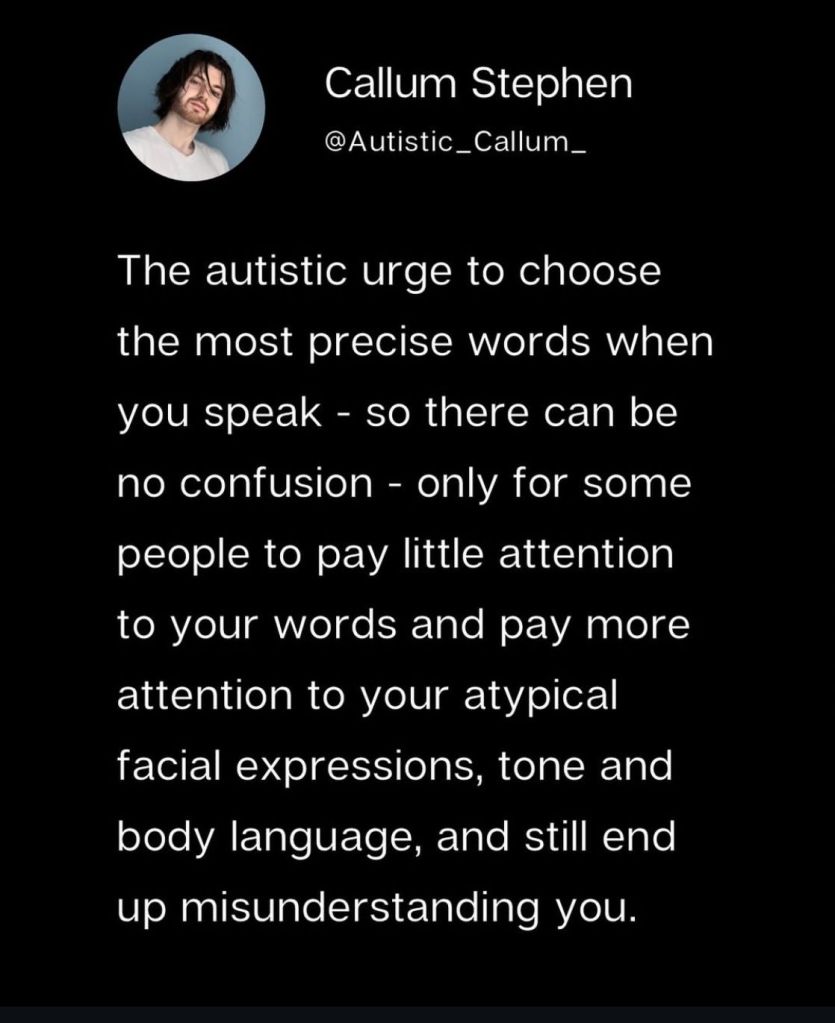
Autistic masking takes a lot of effort, and I do it pretty consistently, but sometimes I cannot. Unmasked behavior may include:
🦄 rocking
🦄 flapping
🦄 lip-biting
🦄 strange, awkward, involuntary breathing/throat sounds that some people feel are disruptive or worrisome (this has been more common since Nov. 2024)
🦄 leg-bouncing
🦄 facial expressions, tone, or body language that don’t seem to match what I’m saying. Typically, a lack of affect or enthusiasm.
🦄 mutism: There are occasions when I become fully non-verbal and incapable of speaking. Often just before this happens, I have difficulty forming words, which gives some warning—but don’t count on it. I can likely still communicate by typing, but know that I am exceedingly overstimulated by sounds at this point. If I cannot speak, please lower your voice to a near whisper.
If you observe these traits, please do your best not to worry about it. It’s just how I am. It doesn’t mean I’m anxious or upset, and I probably don’t need to be comforted.
If you want to support my psychological safety in the workplace:
🌈 Say what you mean, and mean what you say.
Vague language, sarcasm, or passive hints will completely miss me, and likely confuse me.
🌈 Give clear expectations upfront
Be specific about timelines, goals, and what to do if priorities shift. I appreciate an advance sense of the tone for requested meetings, especially if they might otherwise be construed as disciplinary. (i.e., “Please come see me in my office as soon as you can – good feedback”)
🌈 Respect sensory boundaries
Please check in before changing the environment, such as turning on a light if I’m sitting in the dark.
🌈 Avoid surprises
No surprise parties or surprise meetings, please. If you must surprise me, please let me know well in advance the time and date of the surprise so I can schedule it on my calendar.
🌈 Clarifying questions
Normalize checking for understanding, and not penalizing people for not catching implicit rules.
🌈 Written communication
Supplement verbal instructions with notes or outlines; or expect me to be typing notes while we talk. My memory and processing do not function well long-term without this accommodation.
🌈 Honor focused work time
Interruptions can be jarring. Use asynchronous communication (email, messages, post-it notes, etc.) when possible. Check before initiating longer conversations.
🌈 Clear, kind, and structured feedback
✅ State what’s working, what’s not, and what to do next.
✅ I don’t need you to be nice. An absence of meanness is sufficient.
Avoid vague language like:
❌ “Just be more flexible.”
Let me know what specific kinds of flexibility you’re asking for, and what it would look like for you to have that need met.
❌ “I need you to close the loop on that project.”
Unless this is a yarn project, I have no idea what closing the loop means. Please tell me what specific steps or objectives you wish for me to complete.
🌈 Assume good intentions
When we are genuinely on the same team, there is no reason for anyone to feel hurt or upset. So, when that happens, it is a clear sign a miscommunication has occurred. Please choose curiosity over judgment, and let’s find out what the miscommunication was instead of escalating hurt feelings.
✨✨I will do my best to afford you the same✨✨
✉️ Email takes a ton of time, so use it wisely.
I will read every email by the end of my business day or within 4 business hours, whichever is later.
I do not respond to every email unless you ask me something directly or I have a question. Thus, assume I have read your email no later than the end of the business day after you’ve sent it. If you think I owe you a response, please ping me and I won’t be offended.
I am delighted to receive FYI emails with a client anecdote, an article or relevant data related to our work, or something someone on the team accomplished.
If you put FYI in the subject, I’ll know it’s for my information but does not require a response or urgent reading – and I’ll do the same for you.
Use our 1:1 doc for anything you can self-manage, or anything that can wait until our weekly meeting. There, I will see that you added some things to your to-do list and checked them off already; or see something you’ve added that we need to check in about. If you are 98.3%+ confident about what you’re supposed to do, do not wait for my approval to do it.
I intend to set up an online form where you can submit operations- or training-related concerns, requests, and suggestions. I look forward to letting you know when that’s ready to use!
If you feel the urge to send me a text message for any reason, please use the Signal app rather than the standard texting function. This is for everyone’s safety.
Overall:
🌈 I prefer more communication rather than less, and I like to know what’s going on with you and your team that can help me do a better job for you.
🌈 I don’t believe I will create a lot of email volume, and I’ll be the first to recommend we do a quick in-person sync to resolve something rather than a long email exchange. Or better yet, you can be the first to recommend it, and I’ll be the second.
Feedback
I love feedback. I like to give it, and I like to receive it – especially constructive. We’re here to become better versions of ourselves together. We’ll have a quarterly official session, but I’ll endeavor to be timely when I observe or hear something that warrants feedback, and I appreciate the same from you.
Remember, whatever I hear or see, I have your back. Anyone who vents to me about you is going to get my help in discussing their concerns with you directly.
I will solicit feedback in various ways from clients and partners about how well the teams are serving them and meeting their needs. I want to know how I can empower you to consistently improve care for them, and what areas of professional development to focus on for the team.
 Home
Home 